Trauma Test to Support: Your Guide to Healing & Care
Have you recently taken an online screening and are now asking yourself, "What do I do with these trauma test results?" It is completely normal to feel a mix of emotions, from relief to confusion or even being overwhelmed. This guide is here to be your companion. It will help you understand what your results mean and show you the practical, hopeful steps you can take on your path to healing and well-being.
Taking a screening is a brave first step toward understanding your experiences. It provides a snapshot of your current emotional health, giving you a starting point for the journey ahead. If you haven't taken a screening yet, or wish to gain initial clarity, a confidential trauma test can be an invaluable tool. Now, let’s explore what comes next.

Interpreting Trauma Test Results: What Your Score Means
Receiving your results from a trauma screening is a significant moment. It’s important to approach this information with compassion for yourself. Think of your results not as a final label, but as a helpful signpost pointing you toward the right kind of support. This information is a tool for empowerment, giving you the language and insight to take meaningful action.
Understanding Your Risk Level: High, Medium, Low
Most trauma screeners, including ours, categorize results into risk levels like high, medium, or low. This isn't a judgment of your character or strength. It is simply a reflection of the frequency and intensity of the symptoms you may be experiencing.
- High Risk: This suggests that symptoms related to trauma might be significantly impacting your daily life, relationships, and overall well-being. It’s a strong indicator that seeking professional support could be very beneficial.
- Medium Risk: This level may indicate that you are experiencing some persistent symptoms that cause distress. While they may not feel debilitating every day, they are noticeable and could benefit from professional guidance.
- Low Risk: A low-risk score suggests you are experiencing few or no significant symptoms of trauma at this time. However, if you still feel that something isn't right, your feelings are valid and worth exploring with a professional.
Screening vs. Diagnosis: Clarifying the Purpose of Your Test
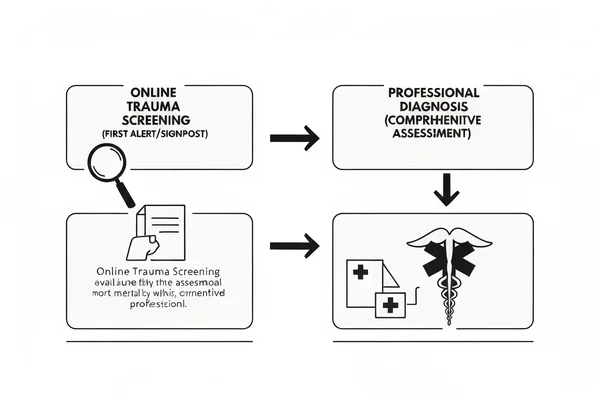
This is the most critical point to understand: an online screening tool is not a diagnosis. Only a licensed and qualified mental health professional, such as a psychologist, psychiatrist, or clinical social worker, can provide a formal diagnosis.
Think of it this way: a fire alarm detects smoke and alerts you to a potential fire. It doesn't tell you the cause or how to put it out. Similarly, a trauma test detects signs of distress. It alerts you that it’s time to call in a professional (a therapist) to properly assess the situation and create a plan. The purpose of the online test is to provide a safe, private, and accessible first alert.
Finding a Trauma Therapist: Your Step-by-Step Guide
Deciding to seek therapy is a powerful next step. The process of finding the right person can feel daunting, but you are not alone. This section provides a practical finding trauma therapist guide to help you connect with the support you deserve.
Qualities of an Effective Trauma-Informed Therapist
Not all therapists have specialized training in treating trauma. Look for someone who is "trauma-informed." This means they understand the profound impact of trauma on the mind, body, and nervous system. Here are key qualities to look for:
- Prioritizes Safety: They create a secure and non-judgmental environment where you feel respected and in control.
- Trust and Transparency: They are open about their methods and collaborate with you on your treatment goals.
- Understands the Nervous System: They recognize that trauma is not just a mental issue but is also held in the body.
- Focuses on Strengths: They help you recognize your own resilience and coping skills as a foundation for healing.
- Specialized Training: They have certifications in evidence-based trauma therapies like EMDR, Somatic Experiencing, or TF-CBT.
Questions to Ask Potential Therapists Before Committing
Most therapists offer a free, short consultation call. This is your chance to interview them and see if they are a good fit. Don't be afraid to ask questions.
-
What is your experience working with individuals who have had experiences similar to mine?
-
What is your approach to treating trauma?
-
How do you ensure your clients feel safe during sessions?
-
What can I expect in our first few sessions?
-
What are your fees, and do you accept my insurance?

Online Directories & Local Resources for Mental Health Care
Finding a qualified professional is more accessible than ever. You can start your search in several places. Online directories like Psychology Today, the National Queer & Trans Therapists of Color Network, or the EMDR International Association (EMDRIA) allow you to filter therapists by location, specialty, and insurance.
Additionally, consider contacting your local chapter of the National Alliance on Mental Illness (NAMI) or searching for community mental health centers in your area. These organizations often provide resources and referrals for affordable care. Understanding your needs is the first step, and a free screening can offer that initial clarity.
Navigating Mental Health Care: Insurance & Modalities
The practical side of navigating the mental health care system can sometimes feel like a barrier. Understanding your options regarding payment and therapy types can make the process much smoother and less stressful.
Making Care Accessible: Understanding Insurance & Affordability Options
Cost should not prevent you from getting help. If you have health insurance, start by calling the member services number on the back of your card to ask about your mental health benefits. Find out about your deductible, co-pays, and whether you need a referral.
If you don't have insurance or your coverage is limited, many therapists offer a "sliding scale," where the fee is based on your income. University psychology departments and non-profit counseling centers also frequently offer low-cost therapy provided by supervised graduate students.
Exploring Therapy Approaches: EMDR, Somatic Experiencing, CBT, & More
There is no single "best" therapy for trauma; the right approach depends on you. Here are a few common and effective modalities:
-
Eye Movement Desensitization and Reprocessing (EMDR): This therapy helps your brain process and integrate traumatic memories, reducing their emotional charge.
-
Somatic Experiencing (SE): This is a body-focused approach that helps release trauma trapped in the nervous system through sensations and gentle movements.
-
Trauma-Focused Cognitive Behavioral Therapy (TF-CBT): This therapy helps you identify and change unhelpful thought patterns and behaviors linked to your trauma.
-
Internal Family Systems (IFS): This approach views the mind as made up of different "parts" and helps you heal by understanding and unburdening wounded parts of yourself.
Preparing for Therapy: Setting Goals for Your Healing Journey
Your trauma therapy preparation guide starts here. Once you've found a therapist, you can take steps to make the most of your time together. Remember, you are an active partner in your own healing process.
What to Expect in Your First Therapy Sessions
The first one to three sessions are typically about building a foundation. Your therapist will focus on getting to know you, understanding your history, and establishing a trusting relationship. You do not need to share the details of your trauma right away. The primary goal is to create a sense of safety. Your therapist will explain their process, discuss confidentiality, and work with you to set initial goals for your work together.
Tracking Progress & Knowing When to Seek Additional Support
Healing is not a straight line; there will be ups and downs. Progress isn't always about big breakthroughs. Sometimes, it's about small shifts: feeling a little calmer, reacting less intensely to a trigger, or having a bit more energy.
Keep a simple journal to note these changes. Be open with your therapist about what is working and what isn't. If you feel stuck or that you aren't connecting with your therapist after several sessions, it is okay to discuss it with them or seek a different provider. Your well-being is the top priority.
Your Next Steps to Healing and Well-being
Your trauma test results aren't a destination—they're the starting line of your healing journey, offering clarity and direction for your path forward. You have already taken a courageous step by seeking to understand yourself better. Remember that your results are simply data, a tool to guide you toward the resources that can truly help.
The path forward involves finding a qualified, compassionate professional who can walk alongside you. Healing from trauma is not only possible—it's your birthright, and you deserve compassionate support every step of the way. Taking that first step toward understanding your trauma can feel both scary and empowering. When you're ready, start your test today to begin your journey of healing.
Frequently Asked Questions About Trauma Screening & Support
Can you self-diagnose trauma based on an online test?
No. An online tool like the Trauma Test is a preliminary screening, not a diagnostic instrument. It is designed to help you identify potential symptoms and understand if you might benefit from professional evaluation. A formal diagnosis can only be made by a licensed mental health professional after a comprehensive assessment.
How reliable are online trauma tests like TraumaTest.org?
Reputable online trauma tests are valuable tools when they are scientifically designed with input from mental health professionals. They serve as a reliable first-look assessment to indicate potential areas of concern. The test at TraumaTest.org is designed to provide a credible and insightful starting point for your self-exploration journey.
What are the immediate first steps to healing from trauma after getting a test result?
The best first steps are gentle ones. First, take a deep breath and acknowledge your courage for seeking answers. Second, remember the result is information, not a label. Third, use the guidance in this article to explore what professional support might look like for you. Your journey starts with self-compassion.
How do I choose the right trauma therapist for my specific needs?
Look for a therapist who is "trauma-informed" and has experience with your specific concerns. During a consultation, ask about their therapeutic approach and how they create a safe environment. Ultimately, trust your intuition. To help you explain your situation, having the insights from a tool like the Trauma Test can give you a clear and concise way to describe what you're experiencing.