Examples of ACEs and the 10 Original Adverse Childhood Experiences
If you are looking for examples of ACEs, you may be trying to name childhood experiences that felt confusing, painful, or hard to place. ACEs stands for adverse childhood experiences: stressful or potentially traumatic events before age 18 that can affect safety, stability, and development. Learning the categories can be a useful first step, but it is not a label for who you are or a verdict on your future. If you want a private way to reflect on childhood trauma patterns, a gentle trauma screening starting point can support self-understanding without replacing professional care.

What ACEs Mean in Trauma Research
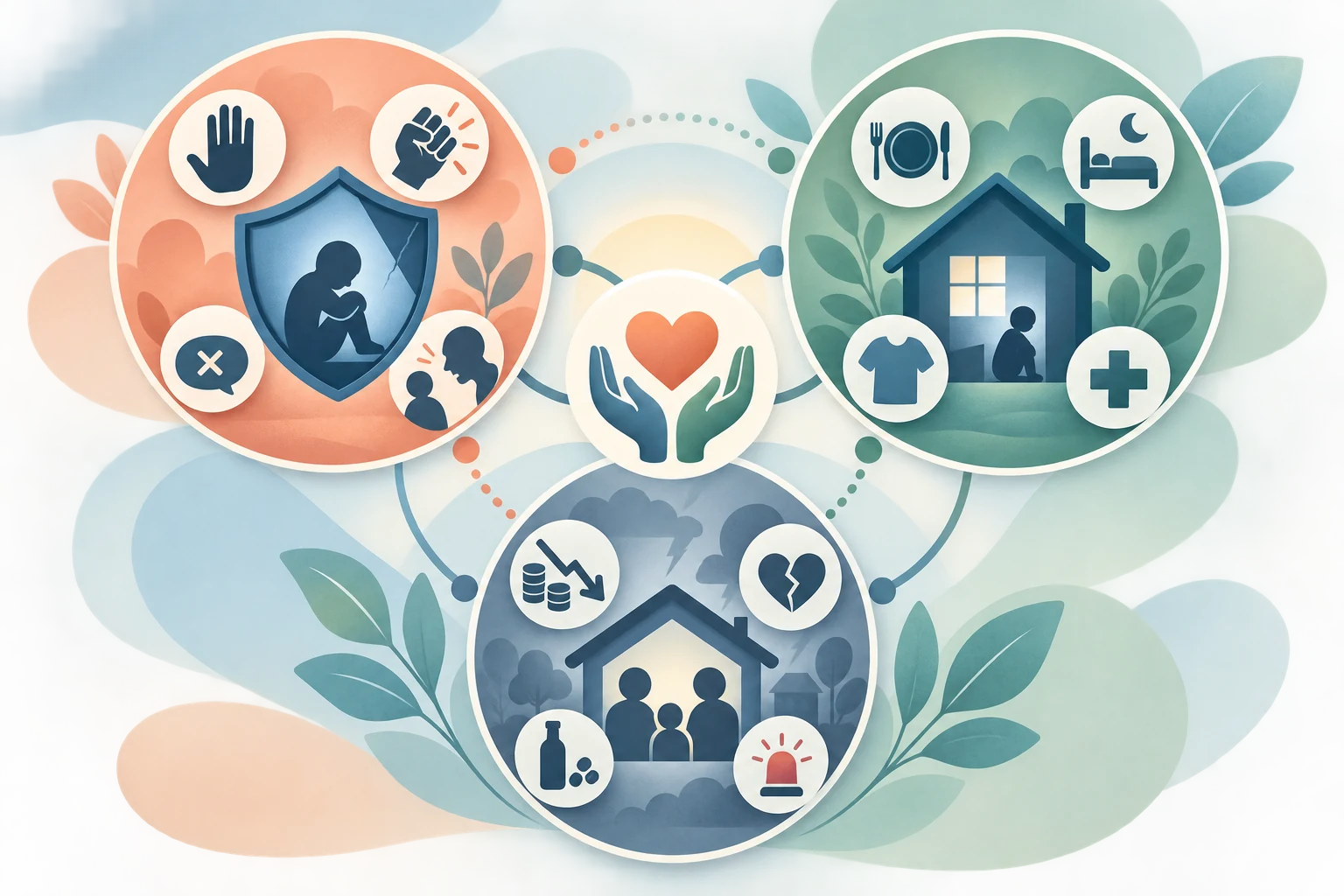
ACEs are commonly grouped into experiences of abuse, neglect, and household challenges. The original ACE Study, developed through CDC and Kaiser Permanente research, looked at ten categories and found that a higher ACE score was associated with greater population-level risk for later health, mental health, and social difficulties. That does not mean a score predicts an individual person's future.
The word "adverse" matters. It points to conditions that can overwhelm a child's ability to cope, especially when they happen repeatedly or without enough support. A single event can matter, and so can a long pattern of instability, fear, or unmet needs.
It also helps to remember what ACEs are not. They are not every bad childhood memory. They are not a complete map of trauma. They do not measure culture, resilience, community support, positive childhood experiences, or the full meaning of your story. The ACE framework is best used as an educational lens, not a complete personal assessment.
What Are the 10 Original ACEs?
The original 10 ACEs are often described in three broad groups: abuse, neglect, and household challenges. Below are plain-English examples of ACEs within each group.
1. Emotional Abuse
Emotional abuse may include repeated humiliation, threats, insults, intimidation, or being made to feel unsafe by words or behavior. An example might be a child being constantly told they are worthless, blamed for adult problems, or threatened with harm in a way that creates ongoing fear.
2. Physical Abuse
Physical abuse involves physical harm or the threat of harm from a caregiver or adult in the home. Examples can include being hit, beaten, pushed, or otherwise hurt in ways that go beyond safe discipline and create fear, injury, or loss of bodily safety.
3. Sexual Abuse
Sexual abuse includes sexual contact, coercion, exploitation, or exposure involving a child. Because this category can be deeply distressing to think about, it is enough to name it clearly without graphic detail. If this applies to you, support from a qualified professional can help you process it at a pace that feels safer.
4. Emotional Neglect
Emotional neglect means a child's emotional needs were not reliably noticed, comforted, or valued. A child might have had food and shelter but rarely received warmth, reassurance, affection, or a sense that their feelings mattered. This can leave a person wondering why their childhood "looked fine" but still felt lonely.
5. Physical Neglect
Physical neglect involves basic needs not being consistently met. Examples include not having enough food, clean clothing, medical care, safe supervision, or stable shelter. Some modern ACEs discussions also include housing instability or food insecurity as related adverse experiences, even when they are not part of the original 10-item list.
6. A Parent or Caregiver Treated Violently
This ACE refers to a child witnessing violence toward a parent, caregiver, or another adult in the home. Even if the child is not physically harmed, living around violence can shape how safe the home feels and how the nervous system learns to respond to conflict.
7. Household Substance Use Problems
This category includes living with someone who misuses alcohol, drugs, or prescription medications in a way that disrupts safety, reliability, or caregiving. An example might be a child regularly managing adult moods, secrecy, chaos, or neglect connected to substance use.
8. Household Mental Health Problems
This ACE includes living with a household member who had serious mental health challenges, especially when the child lacked protection, explanation, or support. The point is not to blame the person with mental health struggles. The ACE framework looks at how unmanaged distress in a household can affect a child's stability and sense of safety.
9. Parental Separation or Divorce
Separation or divorce can be counted as an ACE in the original framework because it may involve loss, instability, conflict, changes in caregiving, or financial stress. Not every separation harms a child in the same way. The emotional climate around the change often matters.
10. Incarcerated Household Member
This category means a child lived with or was close to a household member who went to jail or prison. It may involve sudden separation, stigma, practical instability, grief, or changes in caregiving. Children may also feel confused or responsible unless trusted adults help them understand what happened.
Original ACEs, Expanded ACEs, and the "7 Categories" Question
People often ask about the "7 categories of ACEs" because different programs use different models. The original ACE framework is usually explained as ten experiences across three groups: abuse, neglect, and household challenges. Other public health frameworks expand ACEs to include community and social conditions such as discrimination, bullying, neighborhood violence, poverty, unsafe housing, or community violence.
So, if you see seven, ten, or fifteen categories, the difference is usually the model being used. The original ACE score focuses on the 10-item list. Expanded ACEs try to capture a broader truth: childhood stress does not happen only inside a family. Schools, neighborhoods, systems, and communities can also affect whether a child feels safe and supported.
For SEO searches like "examples of aces and arbs," it is worth noting that ACEs can mean different things in other fields. In trauma and child development, ACEs means adverse childhood experiences. It is unrelated to ACE inhibitors, aviation terms, or "arbs" in betting and finance.
What an ACE Score Can and Cannot Tell You
An ACE score is usually the number of original ACE categories a person experienced before age 18. If someone reports emotional neglect, parental separation, and household substance use, their ACE score would be 3. The score counts categories, not how often something happened, how severe it felt, or whether there were protective adults nearby.
This is why ACE score interpretation needs care. A score of 0 does not mean a person had no trauma. A score of 4 does not mean harm is certain. ACE scores are strongest as public health data: they show patterns across large groups. For an individual, they are only one reflection point.
If you use an ACE questionnaire or ace survey, try to pair the score with context questions: What support did I have? What did I learn to do to stay safe? What still affects my relationships, body, or emotions? What strengths helped me survive? A free childhood trauma self-reflection tool may help you organize those thoughts, but personal support is still important when the topic feels heavy.
How ACEs Can Affect Child Development
ACEs can affect development because children grow through relationships, routines, and predictable care. When a child's environment is repeatedly frightening, chaotic, or emotionally unavailable, the body may adapt by staying alert, shutting down feelings, pleasing adults, avoiding conflict, or expecting danger.
Over time, these adaptations can show up in learning, attention, sleep, trust, emotional regulation, and relationships. Some people notice anxiety, numbness, anger, shame, people-pleasing, perfectionism, or difficulty asking for help. Others do not connect these patterns to childhood until much later.
The key word is "can." ACEs can increase risk, but they do not write a fixed script. Many people with ACEs build healthy relationships, pursue meaningful goals, and develop strong coping skills, especially when they have stable support, trauma-informed care, and chances to create new experiences of safety.
Protective Factors and Positive Childhood Experiences
Protective factors are conditions that help buffer stress. They can include a caring adult, a safe school, reliable routines, friendships, community connection, emotional validation, access to health care, and practical support for the family. Positive childhood experiences matter because they can help a child feel seen, valued, and capable even when other parts of life are hard.
For adults reflecting on ACEs, protective factors are not only about the past. You can still build protection now through supportive relationships, therapy or counseling when available, grounding skills, safer boundaries, regular sleep, movement, creative expression, and communities where you do not have to hide your story.
It can be powerful to ask, "What helped me get through?" alongside "What happened to me?" The first question honors resilience without minimizing harm. The second names reality without making trauma your whole identity.

Using Examples of ACEs as a Gentle Reflection Tool
Examples of ACEs can give you language for experiences that may have been minimized or normalized. They can also help you decide what kind of support might be useful now. You do not need to remember everything perfectly or turn your childhood into a score to deserve care.
A gentle next step is to write down which categories feel familiar, which feel uncertain, and which you would rather explore with a therapist, counselor, physician, or trusted support person. If you are using anonymous trauma screening resources, treat the results as conversation starters, not as final answers.
If reflection brings up panic, thoughts of self-harm, or fear that you might not be safe, seek immediate help through local emergency services or a crisis line in your country. If the feeling is less urgent but still painful, slow down, ground yourself in the present, and consider reaching out to someone qualified to support trauma recovery.
FAQ
What are the 10 most common ACEs?
The original 10 ACEs are emotional abuse, physical abuse, sexual abuse, emotional neglect, physical neglect, witnessing violence toward a caregiver, household substance use problems, household mental health problems, parental separation or divorce, and an incarcerated household member. Some newer frameworks add community and social adversity.
What are the original 10 ACEs?
The original 10 ACEs come from the ACE Study framework and are grouped into abuse, neglect, and household challenges. They are often used in ACE questionnaires and public health research to understand how childhood adversity is linked with later risk across large populations.
What are the 7 categories of ACEs?
There is no single universal 7-category ACE list. Some organizations teach simplified or expanded models that combine original ACEs with community stressors. When comparing resources, check whether they mean the original 10 ACE score or a broader trauma-informed framework.
Can you give me an example of an adverse childhood event?
One example is growing up in a home where a caregiver repeatedly used threats or humiliation, making the child feel unsafe. Another is living with household substance misuse that made routines unpredictable. The impact depends on context, duration, support, and the child's resources.
Is an ACE score the same as a trauma assessment?
No. An ACE score counts exposure to certain childhood adversity categories. A trauma-informed assessment looks more broadly at symptoms, strengths, current safety, support, culture, and personal history. Online screening can help you reflect, but it should not replace professional care.
Can positive childhood experiences reduce the impact of ACEs?
Positive childhood experiences and protective factors can help buffer stress. Supportive adults, safe routines, belonging, emotional validation, and access to care can all make a meaningful difference. They do not erase harm, but they can support resilience and recovery.