What Is Childhood Trauma: Definition, Signs, and Long-Term Impact
Many adults walk through life feeling an unexplainable weight. You might struggle with anxiety that doesn't seem to have a cause, or perhaps you find relationships incredibly difficult to navigate despite your best efforts. Often, we look at our current circumstances for answers, but the root cause may lie further back in time.
If you are asking, "What is childhood trauma?", you are likely seeking to understand the invisible forces that shape your daily life. It is not just about extreme events; it includes a wide range of experiences that overwhelm a child's ability to cope. Understanding this definition is the first step toward validating your experience and finding a path forward.
In this guide, we will explore the psychological definition of trauma, the specific signs that appear in adulthood, and how gaining clarity through tools like our childhood trauma test can be a turning point for your well-being.
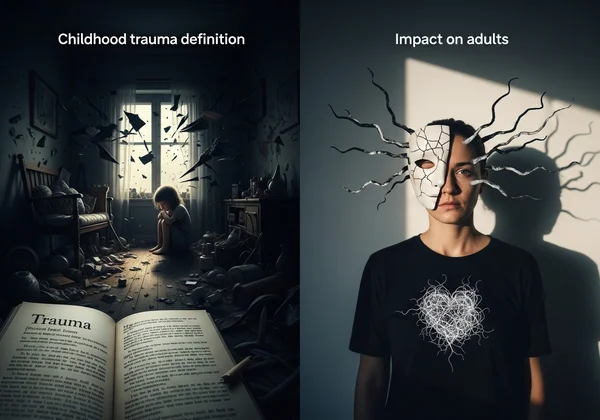
Defining the Experience: What Counts as Childhood Trauma?
When we hear the word "trauma," we often think of singular, catastrophic events like a car accident or a natural disaster. However, in the context of child development, the definition is much broader and more nuanced.
Psychologically, what is considered childhood trauma isn't defined solely by the event itself, but by the child's experience of that event. It occurs when a child feels intensely threatened, frightened, or isolated, and lacks the support system to process those emotions. Because a child’s brain is still developing, these overwhelming experiences can fundamentally alter how they perceive safety and trust.
Beyond Physical Abuse: Recognizing Emotional Neglect
One of the most common misconceptions is that trauma requires physical harm. This belief leads many people to invalidate their own suffering because they "were never hit."
However, psychological research shows that emotional neglect—the persistent failure to meet a child's emotional needs—can be just as damaging as physical abuse.
- Emotional Neglect: This is the absence of something necessary. It happens when a parent is physically present but emotionally unavailable, perhaps due to their own depression, addiction, or workaholism.
- Household Dysfunction: Growing up in a chaotic environment where you had to "walk on eggshells" creates a state of chronic hyper-vigilance.
- The "Good" Childhood: You can have food on the table and a roof over your head and still experience trauma if you were consistently made to feel invisible, unworthy, or unsafe.
Stress vs. Trauma: Understanding Where the Line Is Drawn
Not all difficult experiences result in trauma. Stress is a normal part of growing up. Learning to cope with a difficult test or a playground disagreement helps build resilience. The difference lies in the support system.
- Positive Stress: Brief challenges (like the first day of school) buffered by supportive adults.
- Tolerable Stress: More serious events (like a natural disaster or injury) where the child is protected and comforted by safe relationships.
- Toxic Stress (Trauma): Strong, frequent, or prolonged adversity without adequate adult support. This is where the nervous system gets stuck in "survival mode."
Acute, Chronic, and Complex Trauma
To fully understand your history, it helps to categorize the experience:
- Acute Trauma: A single, isolated stressful event. Examples include a dog bite, a sudden loss, or a medical emergency.
- Chronic Trauma: Repeated and prolonged exposure to stressful events. Examples include ongoing bullying or long-term domestic violence.
- Complex Trauma (C-PTSD): Exposure to multiple traumatic events, often of an invasive, interpersonal nature (like abuse or neglect within the family). This has the most profound impact on a developing personality.
The Spectrum of Adverse Childhood Experiences (ACEs)
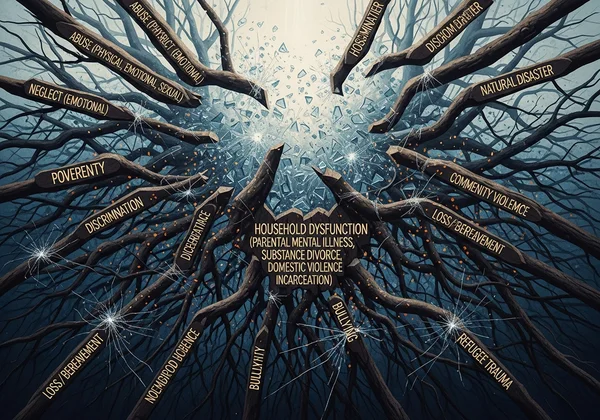
To standardize the definition of childhood trauma, researchers developed the framework of Adverse Childhood Experiences (ACEs). This landmark study by the CDC and Kaiser Permanente established a direct link between childhood adversity and adult health outcomes.
Understanding ACEs types helps remove the guesswork. If you experienced these events, your nervous system likely adapted to survive them.
The 3 Main Categories: Abuse, Neglect, and Household Challenges
The ACE framework groups traumatic experiences into three primary buckets. While every family is unique, these categories cover the most common sources of developmental disruption.
- Abuse
- Physical Abuse: Hitting, shaking, or physical harm.
- Emotional Abuse: Constant criticism, humiliation, name-calling, or threats.
- Sexual Abuse: Any form of unwanted sexual contact or exposure.
- Neglect
- Physical Neglect: Failure to provide food, clothing, or a safe environment.
- Emotional Neglect: Failure to provide comfort, attention, or emotional support.
- Household Challenges
- Mental Illness: Living with a parent suffering from depression or other disorders.
- Substance Abuse: Alcoholism or drug use within the home.
- Divorce/Separation: The loss of a caregiver or the instability of a breakup.
- Incarcerated Relative: Having a household member go to prison.
- Domestic Violence: Witnessing violence against a mother or stepmother.
Examples of "Hidden" Traumas
The original ACE study was groundbreaking, but it is not exhaustive. Many people have valid trauma that falls outside the top 10 ACEs list. Modern psychology recognizes these "hidden" or expanded ACEs as equally significant.
- Community Violence: Living in an unsafe neighborhood or witnessing crime.
- Bullying: Chronic harassment at school or online.
- Medical Trauma: Painful procedures or long hospital stays as a young child.
- Historical/Racial Trauma: The systemic stress of discrimination and marginalization.
- Parental Narcissism: Being raised by a parent who views the child as an extension of themselves rather than an individual.
How the Past Resurfaces: Signs of Childhood Trauma in Adulthood
One of the most confusing aspects of trauma is the time lag. You might feel "fine" for years, only to hit a wall in your 30s or 40s. This is often when the coping mechanisms that helped you survive childhood stop working in adulthood.
If you are researching symptoms of childhood trauma in adulthood, you might recognize that the past is interfering with your present happiness.
Emotional Regulation: Why "Small" Things Can Feel Overwhelming
Do you find yourself reacting with 10/10 intensity to a 2/10 problem? This is a hallmark sign of a nervous system that is stuck on high alert.
When you grow up in an unpredictable environment, your brain learns that small shifts in tone or mood can signal danger. As an adult, a critical email from a boss or a slightly annoyed tone from a partner can trigger a "fight or flight" response. You might feel sudden terror in a specific situation without knowing why. You aren't "making it up"; your body remembers what your mind has hidden.
Relationship Patterns: Navigating Trust Issues and Vulnerability
Trauma often happens within relationships (usually with caregivers), so it makes sense that it shows up most clearly in adult relationships.
- Fear of Abandonment: You may cling tightly to partners or constantly seek reassurance, fearing that any conflict means the end.
- Avoidant Attachment: Alternatively, you might push people away the moment they get too close, viewing intimacy as a threat to your independence.
- Repetition Compulsion: You may find yourself drawn to partners who treat you similarly to how your parents did, subconsciously trying to "fix" the old dynamic.
The Body Keeps the Score: Unexplained Physical Symptoms
Trauma is not just in your head; it is physiological. The constant release of stress hormones like cortisol during childhood can lead to long-term health issues.
Many adults with unresolved trauma experience chronic pain, autoimmune issues, digestive problems (like IBS), or chronic fatigue. If doctors tell you "there's nothing physically wrong," it is possible that your body is expressing the stress your mind has repressed.
Visual Checklist: Do These Patterns Sound Familiar?
Take a moment to review this list. Do you frequently experience:
- Hyper-vigilance: Always scanning a room for danger or analyzing people’s moods.
- Perfectionism: Feeling that you must be flawless to be loved or safe.
- People-Pleasing: An inability to say "no" for fear of upsetting others.
- Dissociation: Feeling "spaced out" or disconnected from your body during stress.
- Imposter Syndrome: A persistent feeling that you are "fake" or "broken."
Moving From Confusion to Clarity: Understanding Your Patterns
Recognizing the signs listed above can be an intense experience. You might feel a mix of relief ("I'm not crazy") and heaviness ("This is a lot to handle"). This reaction is completely normal.
The most important takeaway is that these behaviors are not character flaws. They are adaptive strategies that kept you safe when you were younger. However, identifying them is the crucial pivot point where you stop reacting blindly and start understanding yourself.
Why Self-Awareness is the First Step to Healing
You cannot heal what you do not acknowledge. Many people spend decades treating the symptoms—trying to fix their anxiety, their insomnia, or their relationship conflicts—without addressing the root cause.
Gaining clarity on your background allows you to separate your identity from your trauma. It helps you move from asking "What is wrong with me?" to "What happened to me?"
Using Our Educational Tool for Insight
If the definitions and signs in this article resonate with you, you may benefit from a more structured look at your experiences. It can be difficult to view your own history objectively.
We have developed a resource specifically for this stage of discovery. Our childhood trauma questionnaire is designed to help you quantify and contextualize these experiences.
This is not a medical diagnosis. Instead, it is a safe, private educational tool that helps you:
- Identify potential ACEs you may have overlooked.
- See a visual breakdown of your risk factors.
- Receive personalized insights into how these past events may be influencing your current coping mechanisms.
Taking this step is an act of self-care. It allows you to gather the data you need to decide what comes next, whether that is self-guided reading or seeking a therapist.

The Neuroscience of Survival: How Trauma Affects Brain Development
To truly de-stigmatize your experience, it helps to look at the biology. When a child experiences trauma, their brain development shifts priority from "learning and exploration" to "survival."
The Survival Brain vs. The Thinking Brain
The brain has a "smoke detector" called the Amygdala, which senses danger. In a traumatized brain, the Amygdala becomes enlarged and overactive. Conversely, the Prefrontal Cortex—the part responsible for logic, planning, and emotional regulation—may be underactive.
This explains why you can't just "talk yourself out of" a panic attack. Your survival brain has hijacked the system before your thinking brain has a chance to intervene.
Understanding Repressed Memories
A common question is, "What is repressed childhood trauma?" Sometimes, an event is so overwhelming that the brain blocks access to the explicit memory to allow the child to keep functioning.
However, the memory is often stored as implicit memory—emotional or physical sensations without a visual story. This is why you might feel sudden terror in a specific situation without knowing why. You aren't "making it up"; your body remembers what your mind has hidden.
Healing Is Possible: The Path Forward
The most hopeful news from neuroscience is the concept of Neuroplasticity. Your brain is not fixed in stone. Just as it adapted to survive trauma, it can adapt to learn safety and connection.
Healing is a journey, not a destination. It involves:
- Safety: Learning to feel safe in your body and environment.
- Regulation: Developing tools to manage emotional spikes.
- Processing: Eventually working through the memories with a professional.
Whether you choose to start therapy (modalities like EMDR and Somatic Experiencing are excellent for trauma) or begin with self-education, you have already taken the hardest step: acknowledging the truth.
If you are ready to continue this exploration, we invite you to check your traits with this assessment to get a clearer picture of your starting point.
Frequently Asked Questions About Childhood Trauma
Can I have childhood trauma if I don't remember my childhood?
Yes. It is common for trauma survivors to have gaps in their memory. This is often a protective mechanism. Even without specific memories, you may experience "implicit memories," which appear as emotional flashbacks, physical reactions, or ingrained behavioral patterns.
Is emotional neglect really considered "trauma"?
Absolutely. Emotional neglect is often referred to as the "invisible trauma." The absence of emotional support, validation, and connection can be just as developmentally damaging as the presence of abuse. It teaches a child that their needs do not matter, leading to profound emptiness and worthlessness in adulthood.
Is it too late to heal from childhood trauma as an adult?
No, it is never too late. While childhood events shape brain development, the brain remains plastic throughout life. With the right therapeutic support and self-care practices, adults can build new neural pathways, regulate their nervous systems, and form healthy relationships.
Does strict parenting count as trauma?
It depends on the dynamic. Structure and discipline are healthy. However, if the parenting involved fear, authoritarian control, lack of warmth, or conditional love (where love is withdrawn as punishment), it can be traumatic. This often falls under emotional abuse or household dysfunction.
How do I distinguish between personality and trauma responses?
This is difficult because trauma shapes personality. However, a "trauma response" is usually driven by fear, survival, or a compulsion to avoid pain. If a behavior (like being quiet) feels like a safety strategy rather than a natural preference, it may be trauma-related. Self-reflection tools can help disentangle these threads.