Understanding Childhood Complex: Types, Signs, and Healing
If you've ever wondered why certain emotional patterns keep showing up — a deep fear of rejection, persistent self-doubt, or difficulty trusting those closest to you — the roots may reach further back than you realize. A childhood complex is a cluster of emotions, memories, and behaviors that form during your earliest years and quietly shape your adult life. This guide breaks down the most common types of childhood complexes, the signs to watch for in children and adults, and practical first steps toward healing. Whether you're reflecting on your own experiences or concerned about a child in your life, you'll find clear answers here. You can also explore the trauma screening tool as a starting point for self-reflection.
What Is a Childhood Complex in Psychology?
A childhood complex, in psychological terms, refers to a group of interconnected emotions, memories, and unconscious beliefs that develop during a person's formative years. These patterns often operate beneath the surface. As a result, they influence how you think, feel, and respond to situations — sometimes without you even realizing it.
The concept of a psychological "complex" was first introduced by Carl Jung and later expanded by Sigmund Freud and Alfred Adler. Each of these thinkers observed that certain clusters of emotional experience, especially those rooted in childhood, can become deeply embedded in the psyche.
Where the Term "Complex" Comes From
Jung used the term to describe emotionally charged groups of ideas sitting in the unconscious mind. When triggered, these complexes can create strong, sometimes puzzling emotional reactions. For example, a child who repeatedly felt overlooked may develop a childhood complex around invisibility. Later, they might struggle with a constant need for validation in adult relationships.
Freud focused more narrowly on specific developmental dynamics, like the well-known Oedipus complex. Adler, meanwhile, introduced the inferiority complex, which centers on feelings of inadequacy that begin in childhood.
Why Childhood Complexes Are More Common Than You Think
Having a childhood complex does not mean something is wrong with you. Jung himself emphasized that complexes are a normal part of the human psyche. Everyone carries emotional imprints from childhood — the difference lies in how deeply those patterns affect your daily life.
Many people live with mild childhood complexes without ever identifying them. Others find that unresolved complexes create repeating cycles in their relationships, careers, or emotional well-being. Recognizing these patterns is the first step toward understanding yourself more clearly.
Common Types of Childhood Complexes
Several types of childhood complexes have been widely studied in psychology. Understanding the most recognized ones can help you identify which patterns may be relevant to your own experiences.
The Oedipus and Electra Complex
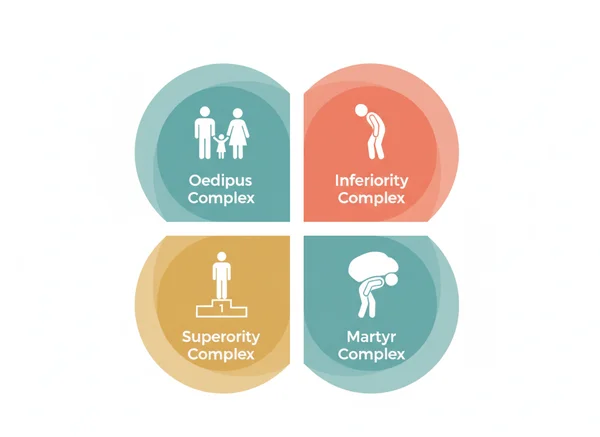
The Oedipus complex, introduced by Freud, describes a child's unconscious attachment to the opposite-sex parent and feelings of rivalry toward the same-sex parent. This typically occurs between ages three and six. The Electra complex is the parallel concept for girls.
While these ideas remain debated in modern psychology, they laid important groundwork for understanding how early family dynamics shape emotional development.
Inferiority Complex vs. Low Self-Esteem
An inferiority complex, coined by Alfred Adler, goes beyond occasional self-doubt. It involves a persistent, deep-seated belief that you are fundamentally less capable or worthy than others. This childhood complex often begins through harsh criticism, comparison to siblings, or repeated experiences of failure.
Low self-esteem, by contrast, tends to be more situational. You might feel less confident in specific areas without carrying a pervasive sense of inadequacy. The distinction matters because a childhood inferiority complex can drive overcompensation, perfectionism, or chronic avoidance in adult life.
Superiority and Martyr Complex
A superiority complex is often the flip side of deep-seated insecurity. A child who feels fundamentally inadequate may develop an exaggerated sense of self-importance as a defense mechanism. In adulthood, this can look like arrogance, excessive competitiveness, or dismissiveness toward others.
A martyr complex, on the other hand, involves a pattern of self-sacrifice combined with a need for recognition. Someone with this childhood complex may consistently put others' needs first — not purely from generosity, but from a deep belief that suffering earns love or worth.
How These Complexes Take Root Early
Childhood complexes rarely develop from a single incident. Instead, they form through repeated emotional experiences — a parent's chronic criticism, a sibling dynamic that felt unfair, or a school environment where you never quite fit in. Over time, these experiences create unconscious beliefs about who you are and what you deserve.
What Is Complex Childhood Trauma?
While the types above describe psychological patterns, complex childhood trauma refers to something more severe. It involves prolonged, repeated exposure to traumatic experiences during a child's developmental years — often within the very relationships meant to provide safety.
How Complex Trauma Differs from a Single Event
Standard trauma, or PTSD, often stems from a single overwhelming event — an accident, a natural disaster, or a violent incident. Complex trauma, however, results from ongoing, repeated harmful experiences. These might include chronic abuse, neglect, domestic violence, or living in an unstable home environment.
Because complex childhood trauma occurs over time and often involves caregivers, it disrupts not just a child's sense of safety but their entire developmental trajectory. Consequently, it affects how they form attachments, regulate emotions, and understand themselves.
Common Causes of Complex Childhood Trauma
The most common causes include:
- Ongoing physical, emotional, or sexual abuse
- Chronic neglect — when a child's basic emotional or physical needs go unmet
- Domestic violence exposure — witnessing harm between caregivers
- Caregiver instability — frequent changes in primary caregivers or living situations
- Community violence — growing up in an environment of persistent threat
These experiences are especially damaging when they occur during critical developmental windows — typically the first several years of life.
Can Neglect Alone Lead to Complex Trauma?
Yes. Neglect is one of the most underrecognized forms of childhood trauma. When a child's emotional needs — such as comfort, attention, and consistent care — are chronically unmet, the impact can be as profound as active abuse. Emotional neglect, in particular, may leave lasting effects on self-worth, emotional regulation, and the ability to form secure attachments.
Key Signs of a Childhood Complex in Children and Adults
Recognizing the signs of a childhood complex is an important step — whether you're observing a child's behavior or noticing patterns in your own adult life.
Signs to Watch for in Children and Teens
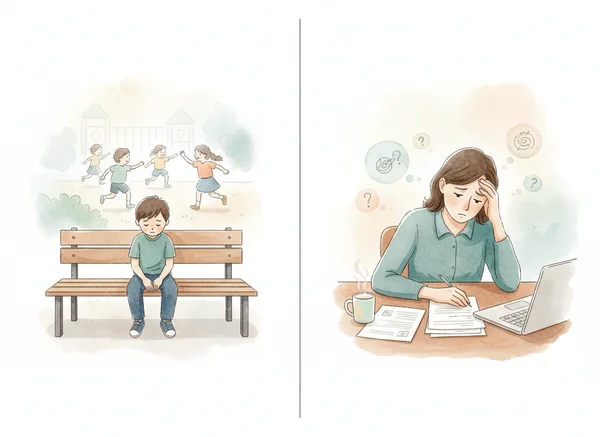
Children experiencing a developing complex or complex trauma may show:
- Sudden changes in behavior — withdrawal, aggression, or regression to earlier developmental stages
- Difficulty concentrating or a noticeable drop in academic performance
- Heightened anxiety, clinginess, or fear of abandonment
- Difficulty trusting adults or forming peer relationships
- Frequent physical complaints like headaches or stomachaches with no medical cause
Teens may display similar patterns, often adding risk-taking behavior, emotional volatility, or social isolation.
Signs That May Appear in Adulthood
In adults, unresolved childhood complexes often show up as:
- Persistent feelings of not being good enough
- Difficulty maintaining close relationships or a pattern of pushing people away
- Strong emotional reactions that feel disproportionate to the situation
- A tendency toward people-pleasing, perfectionism, or overachievement
- Chronic anxiety, low mood, or a sense of emotional numbness
These patterns do not automatically indicate a specific condition. However, they may point toward unresolved emotional experiences worth exploring further.
Emotional Patterns That Often Go Unnoticed
Some signs of a childhood complex are subtle. You might notice a recurring inner voice that says you're not worthy of good things. Perhaps you automatically assume the worst about others' intentions. Or maybe you find yourself repeating the same relational dynamics — choosing partners who are emotionally unavailable, for instance — without understanding why.
These quiet patterns are often the most persistent, precisely because they feel normal to the person living with them.
How Parents and Caregivers Can Recognize the Signs
If you're a parent or caregiver, early recognition matters. Pay attention to:
- Changes in your child's behavior that persist for more than a few weeks
- Emotional responses that seem extreme relative to the situation
- Withdrawal from activities or friendships they previously enjoyed
- Expressions of worthlessness, shame, or self-blame
Trust your instincts. If something feels off, it's worth having a gentle, open conversation — or consulting a child psychologist for guidance.
How Childhood Complexes Shape Adult Relationships and Identity
Unresolved childhood complexes don't simply disappear with age. Instead, they often become woven into your identity and relational patterns. As a result, they influence how you connect with others and how you see yourself.
Impact on Attachment and Trust
Early childhood experiences — particularly with caregivers — lay the foundation for how you approach trust and intimacy. If those early attachments were disrupted by neglect, inconsistency, or harm, you may struggle with:
- Difficulty trusting that others genuinely care
- A pattern of anxious attachment — needing constant reassurance
- Avoidant attachment — keeping emotional distance to feel safe
- Fear of abandonment that leads to either clinginess or preemptive withdrawal
Self-Esteem and the Inner Critic
A childhood complex often feeds an overactive inner critic. This voice might tell you that your accomplishments are never enough, that you don't deserve success, or that you're fundamentally flawed. Over time, this inner dialogue can erode self-esteem and limit the risks you're willing to take.
Emotional Regulation Challenges
Children who experience complex trauma or deep-seated childhood complexes often miss the opportunity to develop healthy emotional regulation skills. In adulthood, this may appear as:
- Intense emotional reactions triggered by seemingly minor events
- Difficulty calming down once upset
- Emotional numbness or disconnection as a coping mechanism
- Swinging between extremes of feeling too much and feeling nothing
Understanding these patterns can help you recognize that your responses are not character flaws. Rather, they are adaptive strategies your younger self developed to survive.
How to Start Healing from a Childhood Complex
Healing from a childhood complex is possible. It doesn't happen overnight, but even small steps toward self-awareness can create meaningful change.
Why Self-Reflection Is a Powerful First Step
Before seeking professional help or diving into therapeutic techniques, many people benefit from simply pausing to observe their own patterns. Ask yourself:
- What emotional reactions come up most frequently for me?
- Are there situations that consistently trigger a strong response?
- Do I notice recurring themes in my relationships or self-talk?
This kind of self-reflection isn't about finding a diagnosis. It's about gaining clarity on what you're experiencing so you can make more informed choices about your next step.
How a Structured Screening Tool Can Help You Organize Your Thoughts
If self-reflection feels overwhelming or hard to direct on your own, a structured tool can help. TraumaTest.org offers a free, anonymous trauma screening questionnaire designed to help you organize your thoughts and identify areas worth exploring further.
This tool is not a clinical diagnosis. It's an educational resource that gives you a framework for understanding your experiences. Think of it as a starting point — a way to put words to feelings that may have been difficult to articulate.
This screening is designed for self-understanding and reflection. It does not replace professional evaluation or treatment. For clinical concerns, please consult a qualified mental health professional.
Therapy Approaches Worth Knowing About
If you decide to take the next step and work with a professional, several evidence-supported approaches are particularly effective for childhood complex trauma:
- Trauma-Focused CBT (TF-CBT) — Helps restructure unhelpful thought patterns connected to traumatic experiences
- EMDR (Eye Movement Desensitization and Reprocessing) — Uses guided eye movements to help the brain process and integrate traumatic memories
- Somatic Experiencing — Focuses on the body's physical responses to trauma, helping release stored tension and stress
Each approach has its strengths. A therapist experienced in childhood trauma can help determine which method fits your specific needs.
Recognizing When Professional Support Makes Sense
Healing from a childhood complex is a journey, and you don't have to navigate it alone. Here are the key points to remember:
- A childhood complex is a normal psychological phenomenon — having one doesn't define you
- Understanding the type and origin of your complex is a powerful act of self-awareness
- Signs of unresolved complexes can show up in relationships, self-esteem, and emotional patterns
- Self-reflection and structured tools like trauma screening assessments can help you organize your thoughts
- Professional support is always a valid and positive next step
Consider reaching out to a therapist if you notice:
- Emotional patterns that consistently interfere with your daily life or relationships
- Difficulty functioning at work, school, or in social settings
- Persistent feelings of hopelessness, shame, or emotional disconnection
- A desire to understand yourself more deeply but feeling stuck without guidance
Seeking help is not a sign of weakness. It's a sign that you value your well-being enough to invest in it.
Frequently Asked Questions
What is the difference between PTSD and complex PTSD?
PTSD typically results from a single traumatic event, while complex PTSD stems from prolonged, repeated trauma — often during childhood. Complex PTSD includes additional symptoms like identity disturbance, difficulty with emotional regulation, and persistent challenges in relationships.
Can a child fully recover from complex trauma?
With appropriate support, therapy, and stable relationships, many children show remarkable resilience. Recovery is a gradual process, and early intervention significantly improves long-term outcomes.
What types of therapy help with childhood complex trauma?
Trauma-focused CBT, EMDR, and somatic experiencing are among the most evidence-supported approaches. A qualified therapist can recommend the best fit based on individual needs.
How do I know if my childhood experiences are affecting me now?
Recurring emotional patterns, relationship difficulties, strong reactions to certain triggers, or a persistent inner critic may suggest that unresolved childhood experiences are influencing your present life. A self-reflection tool can help you explore this further.
Is a childhood complex the same as a mental illness?
No. A childhood complex is a psychological pattern of emotions and behaviors, not a clinical diagnosis. However, unresolved complexes may contribute to emotional difficulties that benefit from professional attention.
Can self-reflection tools replace therapy?
Self-reflection tools are a helpful starting point for self-understanding, but they are not a substitute for professional care — especially when symptoms significantly affect daily functioning or well-being.
What role does a therapist play in addressing childhood complexes?
A therapist provides a safe, structured space to explore patterns, process emotions, and develop healthier coping strategies. They help you understand the origins of your childhood complex and guide you toward meaningful, lasting change.