Trauma Healing Through Validation: A Path to Emotional Recovery
Have you ever shared your deepest feelings, only to be met with dismissal or advice to "just move on"? For trauma survivors, this dismissal can feel like a second injury. It creates a profound sense of isolation, making emotional pain feel even deeper and more confusing.
Understanding why emotional validation matters can transform your healing journey, as research shows its powerful impact on recovery. Recognizing your own emotional landscape is the first step. You can begin this journey of discovery with a confidential and free online test designed to help you recognize potential symptoms of distress. Learn how simple validation practices can start to rewire your brain’s response to past events, creating new paths toward emotional safety and self-acceptance.

What Is Emotional Validation in Trauma Recovery?
Emotional validation is the act of recognizing, accepting, and understanding another person's feelings as real and understandable. In recovery, it means acknowledging that your emotional reactions—whether it's fear, anger, sadness, or confusion—are a valid response to overwhelming experiences. It's the opposite of being told you're "overreacting" or "being too sensitive."
Validation sends a powerful message: "What you feel makes sense." This simple acknowledgment can quiet the inner critic that so often accompanies distressing experiences. It helps you stop blaming yourself for your reactions and start seeing them as the body and mind's natural attempt to cope with unbearable stress. For many, this is the beginning of building a foundation of self-trust and compassion.
The Scientific Basis of Validation for Survivors
Validation has a measurable impact on our brains. Validation helps calm the amygdala, our brain's 'alarm system' that becomes overactive after a difficult experience. When this happens, we can process emotions without becoming overwhelmed. This neurological shift is fundamental to healing. Put simply, validation helps your nervous system shift from a state of alarm to one of safety and calm.
This neurological shift allows you to process emotions without becoming overwhelmed. Interpersonal neurobiology studies show that feeling seen and understood helps regulate our nervous system. This is true whether the validation comes from another person or from ourselves. This co-regulation is fundamental to healing attachment wounds and relational difficulties. By consistently practicing validation, you are actively creating new, healthier neural pathways that reinforce a sense of safety and emotional stability.

Validation vs. Minimization: Why the Difference Matters
It is crucial to understand the difference between validation and minimization. They may seem similar on the surface, but their effects are polar opposites.
- Validation says: "It's okay that you feel this way. Your reaction is understandable given what you've been through." It doesn't mean you agree with the person's actions, but you accept their emotional reality.
- Minimization says: "It wasn't that bad," "Look on the bright side," or "Other people have it worse." These phrases, often intended to help, actually dismiss and invalidate the person's pain.
Minimization tells a survivor that their feelings are wrong or exaggerated, which reinforces shame and self-doubt. It can make them question their own reality and feel even more isolated. Validation, on the other hand, creates a safe space for emotions to exist without judgment. This safety is essential for anyone beginning their healing journey.
Self-Validation Scripts for Healing
While receiving validation from others is powerful, learning to validate yourself is a transformative skill. Self-validation means you become your own source of comfort and acceptance. It is a way to care for yourself when difficult emotions or memories surface.
This practice involves actively talking to yourself in a compassionate, non-judgmental way. It is not about wallowing in pain but about giving yourself the same kindness you would offer a dear friend. Creating simple "scripts" or phrases can be an effective way to begin this practice. Identifying your unique emotional responses is a key part of this process, and a confidential assessment can provide valuable insights to guide you.

Creating Your Personal Validation Mantra
A validation mantra is a short, simple phrase you can repeat to yourself during moments of distress. It acts as an anchor, bringing you back to a place of self-compassion. The key is to make it personal and believable to you.
Here are some examples to help you create your own:
- "It is okay to feel angry right now."
- "My feelings are a normal reaction to an abnormal event."
- "This anxiety makes sense. I will be patient with myself."
- "I am allowed to be sad about what I lost."
- "Feeling overwhelmed is understandable. I can take this one moment at a time."
Choose a mantra that resonates with you. Write it down, say it out loud, or repeat it silently. The goal is to interrupt the cycle of self-criticism and replace it with a voice of acceptance.
Validation Journaling: Processing Emotions Safely
Journaling offers a private, safe space to explore and validate your emotions. Validation journaling involves more than just recording events. It's about having a conversation with yourself on paper. This practice gives your feelings a voice without fear of judgment.
Here's a simple structure you can follow:
- Describe the Feeling: Start by naming the emotion you're experiencing. "Right now, I feel a deep sense of sadness and loneliness."
- Connect it to the Cause: If you can, link the feeling to a trigger or memory. "I think I feel this way because I was reminded of a past event."
- Validate the Emotion: Write a statement of validation. "It makes complete sense that I would feel sad and lonely when thinking about that. Anyone who went through that would feel this way."
- Offer Self-Compassion: End with a kind and supportive message to yourself. "I will be gentle with myself today. It's okay to feel this way, and this feeling will pass."
This practice helps externalize your thoughts, making them feel less overwhelming. Over time, it trains your mind to respond to your own distress with kindness rather than criticism.
Validation in Relationships While Healing
These experiences can profoundly impact relationships. Survivors may struggle with trust, intimacy, and communication, often feeling misunderstood by those closest to them. Introducing the practice of validation into your relationships can be a healing experience for everyone involved.
When loved ones learn to validate your experience, it helps repair feelings of isolation and rebuilds secure connections. However, it also requires you to learn how to communicate your needs and set boundaries when validation isn't offered. Understanding your specific relational challenges is a crucial starting point. Taking a trauma assessment can help clarify patterns that affect your connections with others.
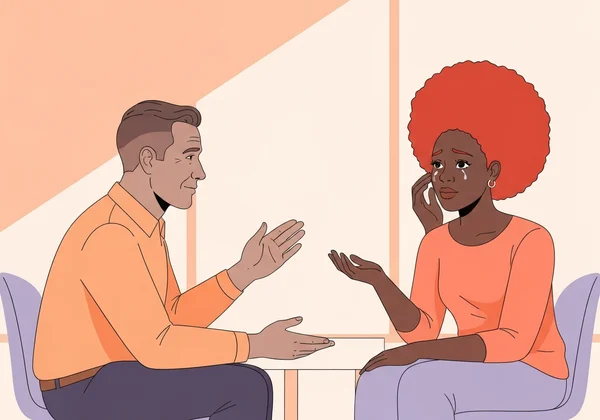
Teaching Loved Ones to Validate Your Experience
Your friends and family may want to support you but simply don't know how. They might resort to unhelpful advice or minimization because they feel helpless and want to "fix" your pain. You can gently guide them toward more helpful responses.
Here are a few things you can say:
- "When I share my feelings, I'm not looking for a solution. It would really help if you could just listen and tell me that what I'm feeling makes sense."
- "I appreciate you trying to help, but phrases like 'don't worry' actually make me feel more alone. Just hearing 'that sounds incredibly hard' would mean a lot."
- "Validating my feelings doesn't mean you have to agree with me. It just means you understand why I might feel this way from my perspective."
Teaching others takes patience. Start with the person you trust the most. Sharing articles or resources about validation can also be a gentle way to introduce the concept.
Setting Boundaries When Validation Isn't Possible
Unfortunately, not everyone in your life will be capable of or willing to offer validation. In these situations, protecting your emotional well-being by setting firm boundaries is an act of self-love.
Setting boundaries might look like this:
- Limiting Topics: Deciding not to discuss your past or deep feelings with certain people. "I appreciate your concern, but I'm not comfortable talking about this with you."
- Ending Conversations: Politely ending a conversation when you feel dismissed or invalidated. "I can see we have different views on this. Let's change the subject."
- Reducing Contact: If someone consistently invalidates your experience and causes you distress, you may need to limit the time you spend with them.
Setting boundaries is not about punishing others; it's about honoring your own healing process. It reinforces the message that your feelings are valid, even if someone else can't see it. This is a powerful step in reclaiming your sense of self-worth.
Your Journey Toward Healing With Validation
Healing unfolds uniquely for each person, with no fixed timeline or endpoint. Emotional validation is a foundational tool on this path, offering a powerful antidote to the shame and isolation that difficult experiences so often leave behind. By practicing self-validation and learning to seek it from others, you create an environment of emotional safety where healing can truly begin.
Remember, your feelings are real, they are important, and they make sense. Recognizing the validity of your own experience is the first and most crucial step. It is an act of profound self-compassion that empowers you to move forward.
If you are just beginning to explore how past events may be affecting you, understanding your personal symptoms is a vital first step. To gain clearer insight, you can start your free trauma test today. It is a confidential, science-backed tool designed to help you understand your experiences and guide you toward the right path for your healing.
Frequently Asked Questions About Validation in Recovery
How does validation help heal symptoms of distress?
Validation helps calm the body’s stress response system, which is often in overdrive after a distressing event. When you feel understood and accepted, your brain receives a signal of safety. This reduces symptoms like hypervigilance, anxiety, and emotional reactivity, allowing you to access clearer thinking and begin processing difficult memories more safely.
Can I practice validation if I don't have supportive people around?
Yes, absolutely. This is where self-validation becomes your most powerful tool. Using techniques like journaling and personal mantras allows you to become your own source of support. While external validation is helpful, building a strong foundation of self-acceptance is essential for long-term healing, regardless of your social circle.
Is self-validation the same as self-pity when recovering?
No, they are very different. Self-pity often involves a feeling of helplessness and a belief that one's situation is unchangeable. Self-validation, however, is an active and empowering practice. It acknowledges pain without judgment ("It's okay that I feel this sad") and fosters the resilience needed to move through it. It is about compassion, not powerlessness.
How long does it take for validation techniques to make a difference in recovery?
The effects of validation can be both immediate and cumulative. A single moment of true validation can bring instant relief and a sense of calm. Consistent practice, however, is what leads to lasting change. Over weeks and months, these techniques can help rewire neural pathways, build self-trust, and fundamentally change how you relate to yourself and your emotions. Your first step to understanding your personal timeline can start with a simple online test.